
Career OS
Career OS grew out of my own search for what to do next. I had years of work spread across businesses, projects, documents and half-remembered conversations. Before I could explain what I should do next, I needed to make sense of what I had already done.
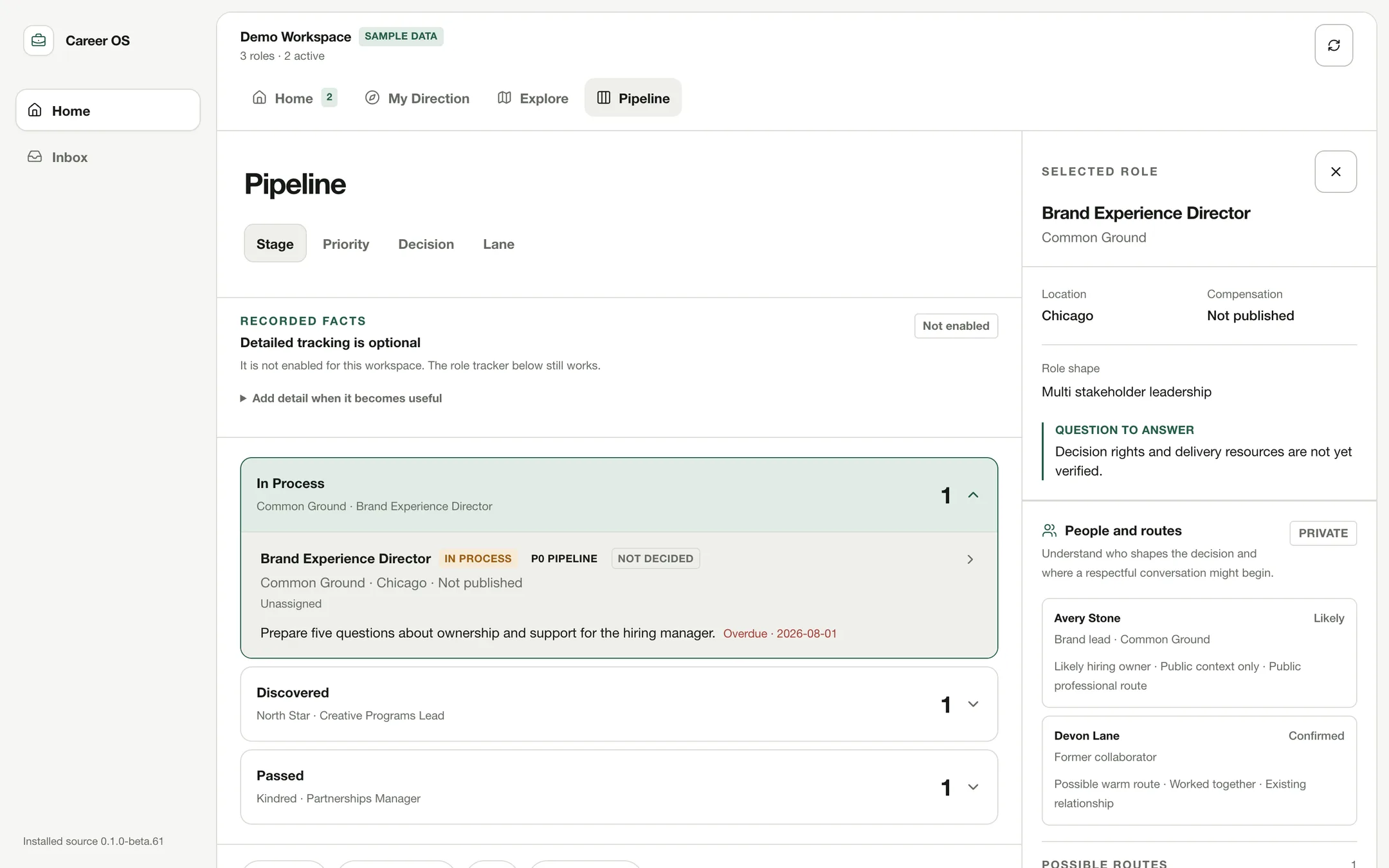
I built a private workspace where an AI assistant could help with that work over time: recover evidence, examine possible directions, research opportunities, prepare applications and learn from the results. A career is larger than a job search, so the same system can help someone make their current work more meaningful or explore an independent practice.
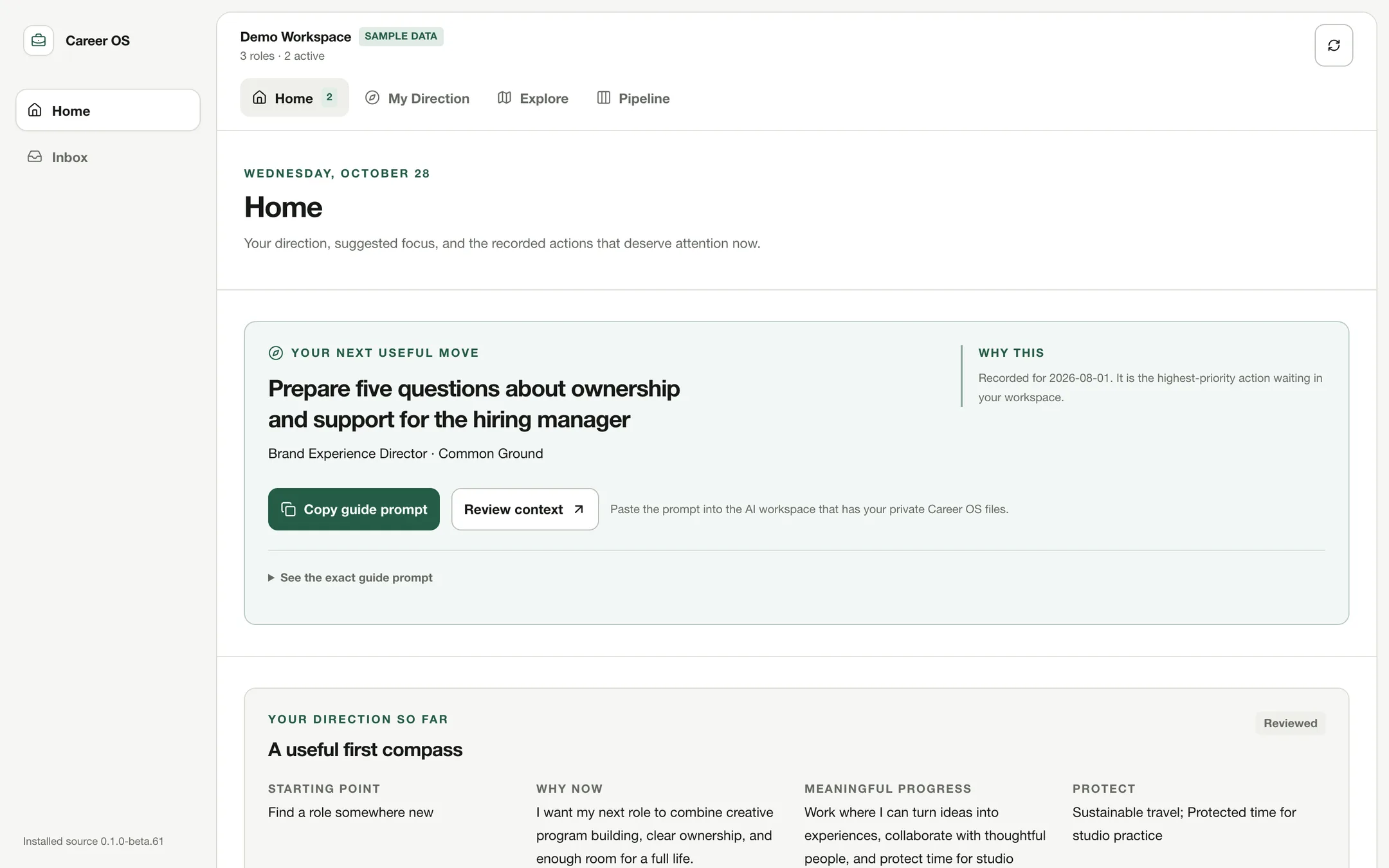
The career compass records what matters to the person and the hypotheses they want to test. Opportunities are considered against it. Evidence stays connected to its source, application materials stay connected to the role, and new learning can reopen the compass for review.
Building it for other people changed the problem. An early tester began in a chatbot that could not run the system. I rebuilt the start around a simpler question: which workspace can do the work on this person’s computer? Setup now guides that choice before asking for their career history.
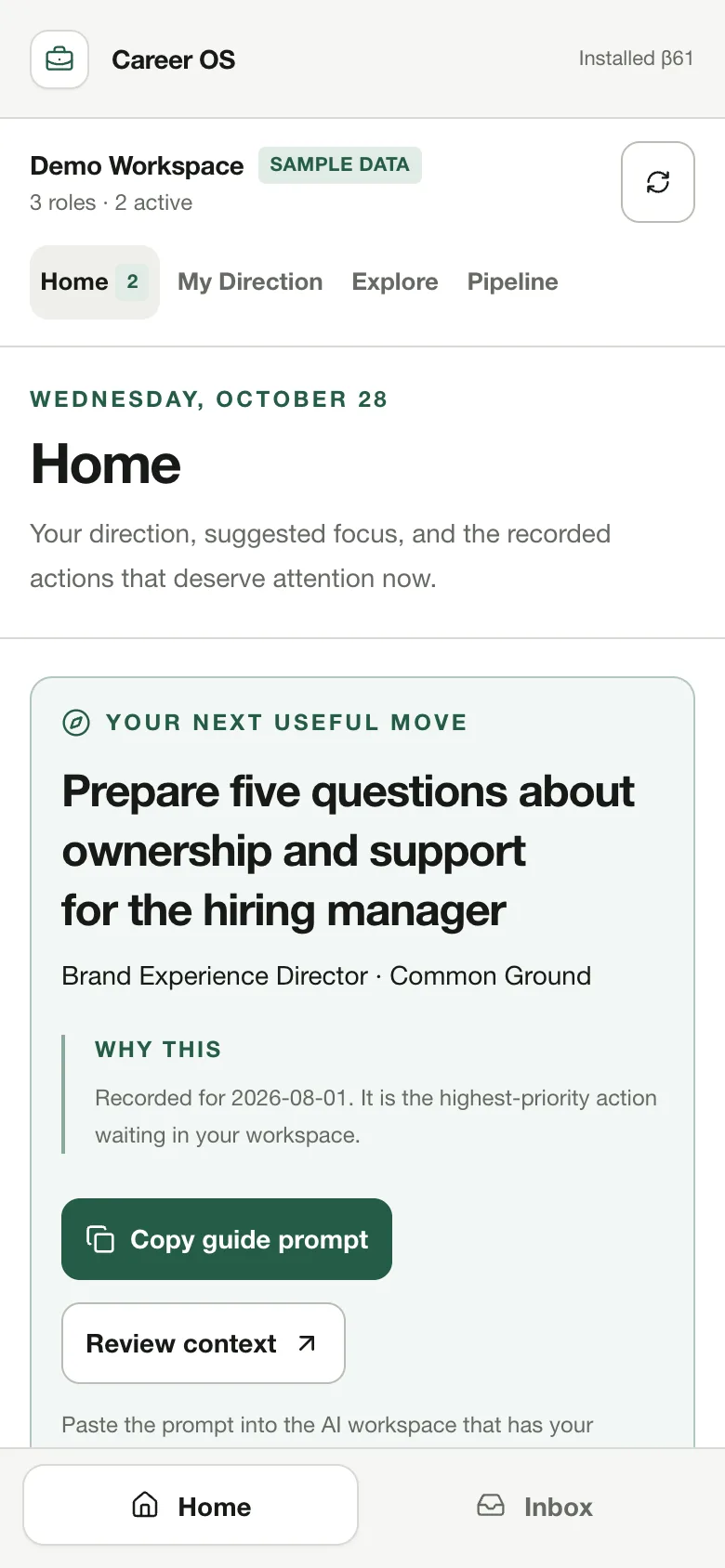
The project is in private beta. Career information lives in a separate local workspace; the person controls access and decisions. The assistant can do the patient research and preparation, while messages, applications and other consequential actions remain theirs to authorize.
All screens shown here use fabricated demonstration data.